 |
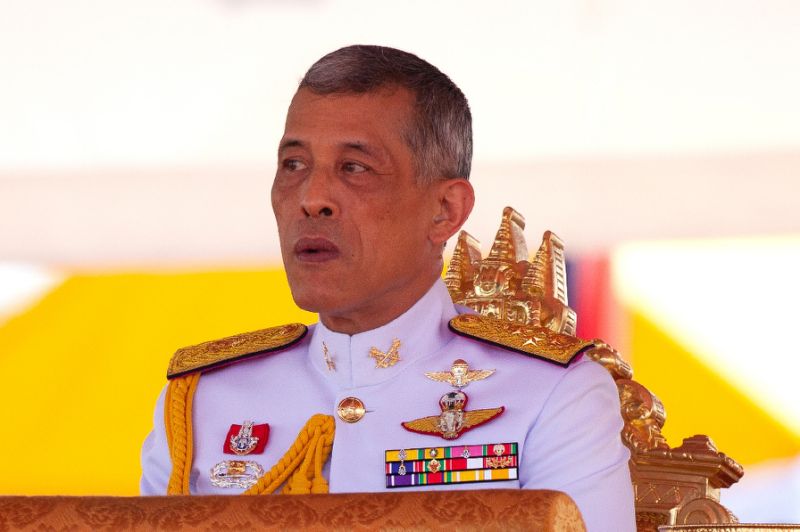
| Thai King Maha Vajiralongkorn inherited one of the world's great fortunes when he ascended the Thai throne following the October 2016 death of his father (AFP Photo/ Panupong CHANGCHAI) |
Thailand's king has been granted full ownership of the palace's multi-billion dollar assets under a law passed last year, according to a rare "explanatory note" published by the financial arm of the powerful but secretive monarchy.
King Maha
Vajiralongkorn inherited one of the world's great fortunes when he ascended the
Thai throne following the October 2016 death of his father, who ruled for seven
decades.
Analysts
say the Chakris are one of the world's richest royal dynasties, with estimates
varying between $30-60 billion, although the monarchy does not publicly declare
its wealth and is shielded from scrutiny by a draconian lese majeste law.
Most of the
money is controlled by the opaque Crown Property Bureau (CPB), a vast portfolio
that includes massive property ownership and investments in major companies.
But last
July the Thai junta amended a royal property law for the first time in 69 years
to give Vajiralongkorn full control over the CPB.
It is one
of several steps taken by Vajiralongkorn to increase his personal control over
the palace bureaucracy and its wealth since taking the throne.
The
amendment means "all 'Crown Property Assets' are to be transferred and
revert to the ownership of His Majesty, so that they may be administered and
managed at His Majesty's discretion," according to a note featured prominently
on the front page of the CPB's website.
The
document was not dated and the CPB, which rarely grants interviews, could not
be reached for further comment.
The note
clarified that all of the CPB's shareholdings will also "be held in the
name of His Majesty."
The CPB has
major investments in some of Thailand's largest companies, such as Siam
Commercial Bank and Siam Cement Company.
The note
also said that previously tax exempt CPB assets will now be liable to taxation
"in line with His Majesty's wishes."
Public
discussion of the monarchy's actions remains taboo due to Thailand's lese
majeste law, which punishes any perceived criticism with up to 15 years per
offence.
All media
based in Thailand must self-censor when reporting on the monarchy to avoid
violating the lese majeste law.
No comments:
Post a Comment
Note: Only a member of this blog may post a comment.