Jakarta Globe – AFP, October 22, 2013
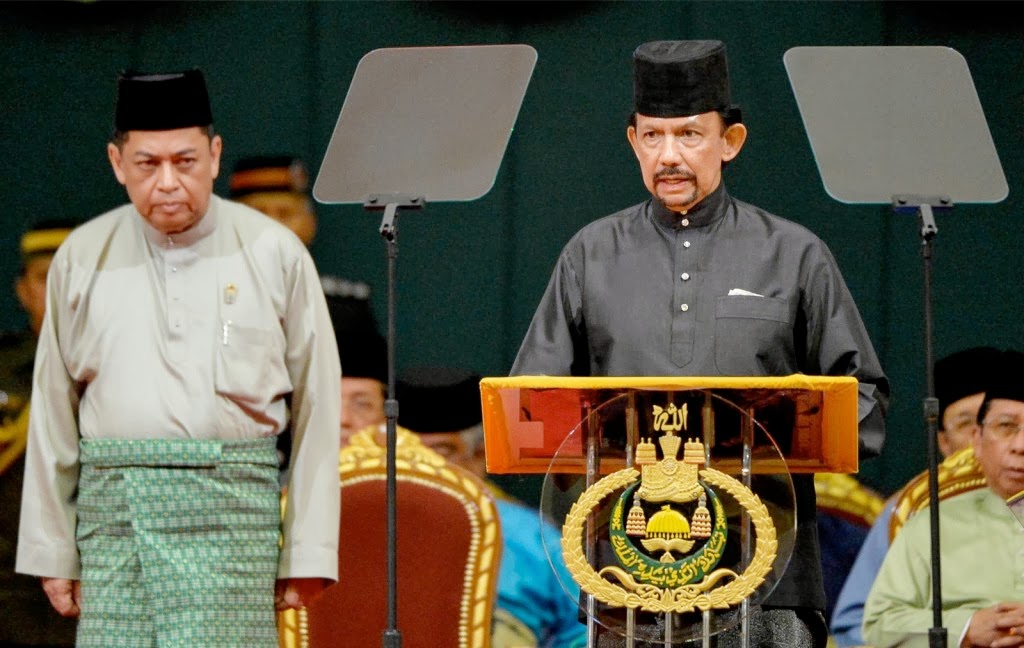 |
| Brunei Sultan Hassanal Bolkiah delivers his speech during the official opening of the Majlis Ilmu 2013 in Bandar Seri Begawan on October 22, 2013. (AFP Photo) |
Bandar Seri
Begawan. The Sultan of Brunei on Tuesday announced the phased introduction of
tough Islamic punishments including death by stoning for crimes such as
adultery, in the monarchy’s latest step towards conservatism.
Sultan
Hassanal Bolkiah — one of the world’s wealthiest men — said in a speech that a
new Shariah Penal Code which has been in the works for years had been gazetted
Tuesday and would “come into force six months hereafter and in phases”.
Based on
the details of particular cases, punishments can include stoning to death for
adulterers, severing of limbs for theft and flogging for violations ranging
from abortion to consumption of alcohol, according to a copy of the code.
“By the
grace of Allah, with the coming into effect of this legislation, our duty to
Allah is therefore being fulfilled,” said the sultan, now 67 years old.
An
all-powerful figure whose family has ruled the languid, oil-rich country of
400,000 for six centuries, the sultan first called in 1996 for the introduction
of shariah criminal punishments.
Brunei
already practices a conservative brand of Islam relative to its Muslim
neighbors in Southeast Asia, Malaysia and Indonesia.
The sale
and public consumption of alcohol are banned and authorities closely restrict
the activities of other religions.
It was not
immediately clear how aggressively the new criminal code, which applies only to
Muslims, would be implemented.
Brunei
already has a dual-track system combining civil courts based on British law —
the sultanate was a British protectorate until 1984 — and Shariah courts that
are currently limited to personal and family issues such as marriage disputes.
Two years
ago, a top official in the Attorney-General’s office said Brunei would apply an
extremely high burden of proof for shariah criminal infractions under the code,
and that judges would have wide discretion in applying the Islamic punishments.
The
comments were aimed at easing fears expressed by some Bruneians of a lurch
toward draconian punishments.
Nearly 70
percent of Brunei’s people are Muslim ethnic Malays, while about 15 percent are
non-Muslim ethnic Chinese, followed by indigenous peoples and other groups.
Funded by
oil and gas wealth mainly in offshore fields in the South China Sea, Brunei has
one of Asia’s highest standards of living.
The
government provides citizens with free medical care and education through the
university level.
But the
sultan has leaned increasingly towards Islamic orthodoxy in recent years,
including the introduction of mandatory religious education for all Muslim
children and ordering all businesses in the country closed for two hours during
Friday prayers.
Agence France-Presse
No comments:
Post a Comment
Note: Only a member of this blog may post a comment.